Soft Matter, 2011, 7, 6426-6434. Development of an injectable system based on elastin-like recombinamer particles for tissue engineering applications,
writer:M. B. Oliveira, Wenlong Song, L. Martín, S. M. Oliveira, S. G. Caridade, M. Alonso, J. C. Rodríguez-
keywords:injectable, elastin-like protein, tissue engineering
source:期刊
Issue time:2015年
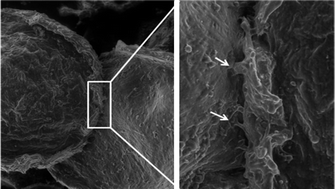
An elastin-like recombinamer (ELR) containing the RGD cell adhesion domain was used to fabricate microparticles by an innovative and affordable process based on the use of superhydrophobic surfaces. Two microparticles types with different crosslinking extents were prepared. The biological response was tested using an osteoblast-like cell line (SaOs-2) performing proliferation and alkaline phosphatase (ALP) quantification tests, as well as assessing cytotoxicity, morphology and cell distribution on the particles. The main goal of the work was the assessment of the in vitro formation of cell-induced microparticle aggregates that could provide indications for the possible formation of an in situ-forming scaffold upon implantation. ELR microparticles have been successfully obtained by deposition of a polymeric solution on bioinspired polystyrene superhydrophobic surfaces and two different crosslinking extents were achieved by controlling the time of exposure to the crosslinker. The crosslinking extent affected swelling behavior and the dynamic mechanical properties of the particles. SaOs-2 morphology, ALP expression, spatial distribution and ability to bind the microparticles together were dependent on the physicochemical properties of the microparticles: the more crosslinked condition was the most favorable for cell proliferation and to form a cell-induced aggregation scaffold, making these particles suitable to be applied in bone tissue engineering.